
Jerseys: The Hidden Jackpot in Sports


Sports and Athletics have become major parts of today’s society. From basketball to soccer, there is a large amount of sports played across the globe. Not only this, but there are many different levels of these sports, such as college and professional. Many people devote their lives to these sports, becoming involved on some level or another. But most watch from the sidelines, cheering on their favorite team, wearing a jersey or team jacket. That is the focus for today: Jersey’s.
Now, everyone knows about traditional jersey marketing, like the company putting their logo on the shirt to reinforce their product or something along those lines. But what many people don’t realize is where the money goes when they buy their product. Some may believe that the money goes directly to the player, some believe the money goes to the team, but the fact of the matter is that most of the money goes to whichever company has hade a deal with that branch of the sport. In sports such as soccer, individual teams often sign with a brand, whereas in in the US, entire leagues such as the NBA or the NFL sign with a brand. For example, Nike has a deal with the NFL. Often what happens is that the company pays the league to allow for the deal to come through because of how big the profits are. In that same Nike deal, Nike paid over 1 billion dollars to make the arrangement.
Now, you may be asking why on earth companies would want to pay over a billion dollars to sell profits. The simple answer to that is how large the profit margins are. When these deals are made, a monopoly is created at the same time. For example, in the example mentioned, no other company aside from Nike could produce or sell the NFL jerseys, meaning that Nike solely dictates the price. This also eliminates any kind of market competitiveness once the deal has been made. The result of this is that companies are able to produce jerseys for very little money, typically under ten dollars, but then sell these same jerseys for hundreds of dollars, depending on the player. It’s this incentive that causes companies to pay over a billion dollars to produce a league’s jerseys.
The overall message here is that jerseys are many of these companies’ best forms of subliminal marketing. The fact of the matter is that these deals, despite the cost, often come out with gains for the companies, with sales in 2016 for the NFL being 7.8 billion. While a portion of this does go to the league itself, this still often leaves the companies with over double the money they invested into the sales. Companies often do a minimal amount of advertising on the jersey’s themselves, as typically however well the players play determines how well the jerseys sell.
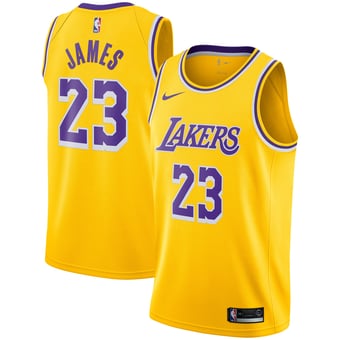
Image result for nba jerseys

Comments

  1. I saw an entire section of Lakers crop tops, sports bras, and sweatpants at Forever 21 the other day. I am crying.

    ReplyDelete

Post a Comment

Popular posts from this blog

Tony Stark: Marvel's Mook

Over the past decade, Marvel Studios has become one of the most dominant forces in our society. They bring their movies into the spotlight of the world, creating some of the highest earnings the world has ever seen. Currently, every one of their movies has generated at least 500 million in the box office, save The Hulk and Captain America: The First Avenger. Because of this widespread publicity and power, Marvel holds sway over much of population, particularly younger generations. And it has taken this power well, helping racial discrimination with movies such as Black Panther as well as gender discrimination with many female heroes and Captain Marvel coming out later this year. These things are all amazing, but they are not the topic of todays blog. That honor belongs to the concepts of the Midriff and the Mook and what Marvel has done with these concepts. With the Midriff, Marvel has almost avoided the topic entirely, with no female characters jumping out as apparent Midriffs. ...

Guerrilla Advertising

Over the past week, I began seeing certain parts of the media where you wouldn’t expect to. Specifically, I saw advertisements in areas I wasn’t expecting. There were two specific instances that come to mind. First, when I was using the restroom in a public bathroom, I looked up and there was an ad. Its not something one really expects to see while using the restroom. The next example that comes to mind is that when I went ice skating on Friday, there was a RT logo beneath the ice. Once again, one doesn’t really expect to look down and see a logo for a company underneath ice, and it definitely does put that company in the back of your mind. This form of advertisement is becoming more and more common, with ads appearing everywhere. This advertisement is called guerilla advertising. Guerilla advertising is essentially putting ads for a company in every public spot available to put an ad in. This means advertising on the actual pavement of the street, public buildings and even advertis...

Pharma: The Lives Lost behind the Advertising You See

The pharmaceutical industry has become one of the largest aspects of our everyday life. This industry has developed hundreds of life-saving drugs, curing diseases that were formerly a death sentence to anyone who had them, such as Hepatitis C and Tuberculosis. These same companies have also developed some of the drugs that many use on a daily basis, such as Tylenol. There is no denying that these companies have had an immeasurable positive impact on the world with millions of lives saved worldwide as well as millions more cured of previously chronic diseases. But how many more lives could this industry save if they didn’t spend so much money of advertising? A study from 2013 found that 9 of the top 10 pharmaceutical companies spend more on marketing and advertising than they did on research and development. In fact, the biggest company, Johnson and Johnson, spend a little of two times more money on marketing (17.8 billion dollars) than they did on actual research and development (8...